Every defense ministry is studying Ukraine. The risk is learning the obvious lesson, buy more drones, while missing the structural one about how autonomous coordination changes the math.
Executive Summary
- Ukraine has become the world's proving ground for drone warfare, validating the autonomous-swarm threat at operational scale.
- The central lesson: cheap, numerous, increasingly autonomous drones impose ruinous cost-exchange on conventional air defense.
- Commands that read Ukraine only as a lesson about more drones, rather than about autonomous coordination, will draw the wrong conclusions.
The war in Ukraine has been the most consequential live demonstration of drone warfare in history. Mass attacks using cheap long-range drones, first-person-view strike drones, and increasingly autonomous coordination have reshaped how both sides fight. Defense establishments worldwide are studying it intently, and rightly so.
But there is a difference between the surface lesson and the structural one. The surface lesson is that drones are now central to warfare. The structural lesson is about what makes them so hard to defend against: cost asymmetry and growing autonomy. Commands that internalise only the first will modernise for the wrong war.
What Ukraine Has Demonstrated
Ukraine validated the autonomous-swarm threat at operational scale, with cheap, numerous drones overwhelming defenses built for fewer, costlier threats.
The conflict has shown that large numbers of inexpensive drones can saturate and exhaust air defenses designed for a smaller number of high-value threats. Both sides have pushed toward more autonomy to counter electronic warfare, reducing dependence on the very links that defenders try to disrupt.
This is no longer theory. The drone-and-missile attacks seen in Ukraine, and echoed in the Red Sea, are an operational reality that has validated the threat model the counter-swarm field was built to address.
The Cost-Exchange Lesson
Ukraine's clearest lesson is economic: defending against cheap drones with expensive interceptors is a losing equation at scale.
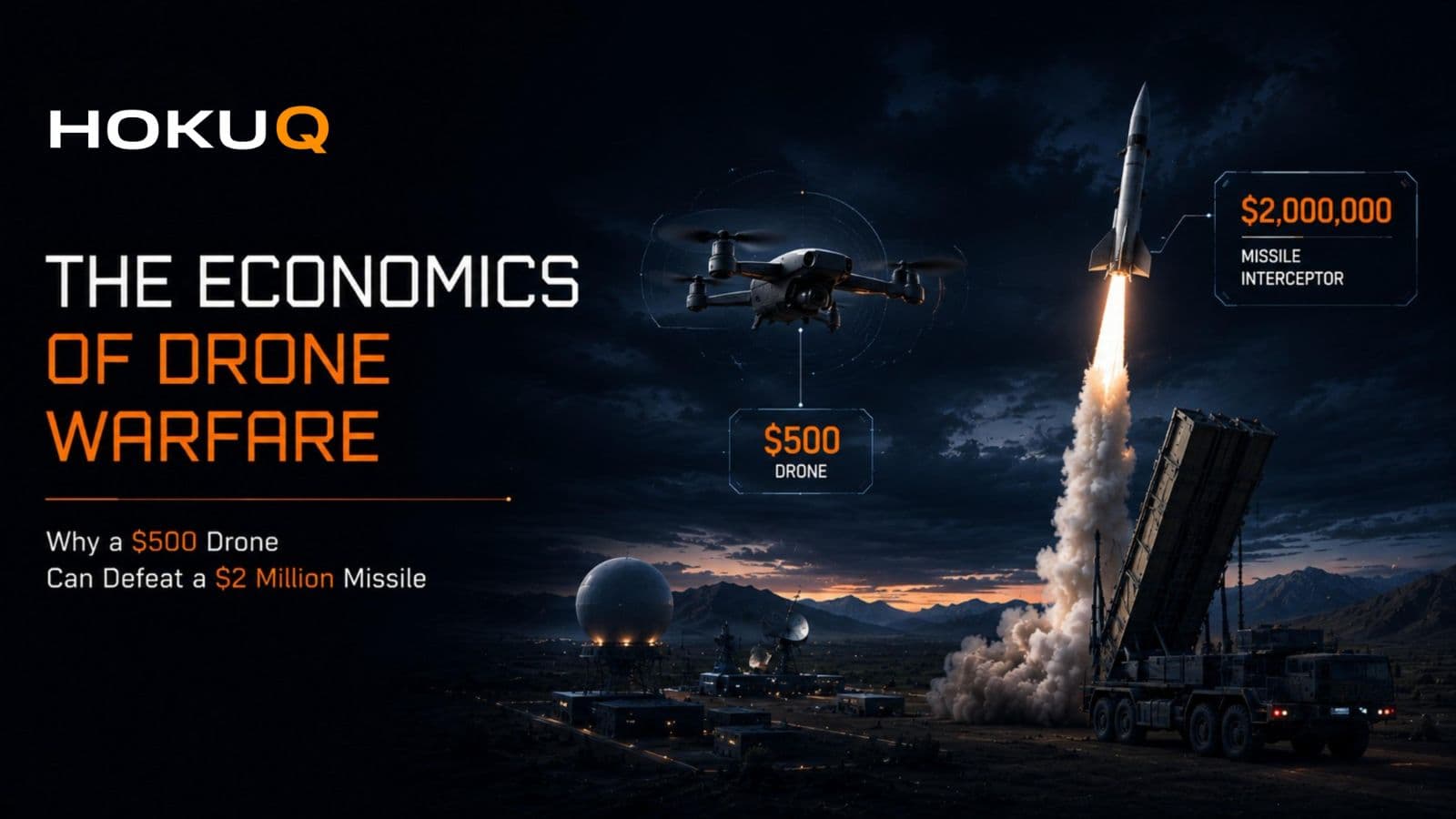
When a drone costing tens of thousands is met with an interceptor costing millions, the defender loses the economic exchange even while winning the engagement. An adversary that can produce drones faster and cheaper than you can produce defenses will exploit that gap deliberately.
Ukraine has made this asymmetry impossible to ignore. Any modernisation that does not address cost-exchange is buying a defense an adversary can bankrupt by sending more cheap drones.
The Lesson Most Commands Are Missing
The deeper lesson is not that there are more drones; it is that autonomous coordination is removing the human dependencies defenses rely on.
As electronic warfare degrades remote control, both sides move toward autonomy. That trend points directly at the future threat: swarms coordinated by onboard AI, with no link to jam and no operator to target. Reading Ukraine as merely a story about quantity misses the trajectory toward autonomous coordination.
Commands that respond by buying more drones and more interceptors are preparing for the visible threat while the structural one, autonomous coordination, advances past them.
What Commands Should Act On
The actionable lesson from Ukraine is to modernise against autonomous coordination and cost-exchange, not merely against drone quantity.
The right response is to prioritise capabilities that change the cost-exchange equation and engage the coordination layer of autonomous swarms, the direction the threat is clearly heading. That means investing in the layer that defeats the swarm's intelligence, not only in more effectors against individual airframes.
HokuQ is built for the threat Ukraine is pointing toward: autonomous, coordinated swarms defeated at the intelligence layer. The commands that act on the structural lesson will be ready for the war that is arriving, not the one already underway.
Modernise for the war Ukraine is pointing toward. Request a HokuQ doctrine briefing.